butterflyhouse
butterflyhouse
BUY SOME FOR FRIENDS AND FAMILY
Couldn't load pickup availability

butterflyhouse
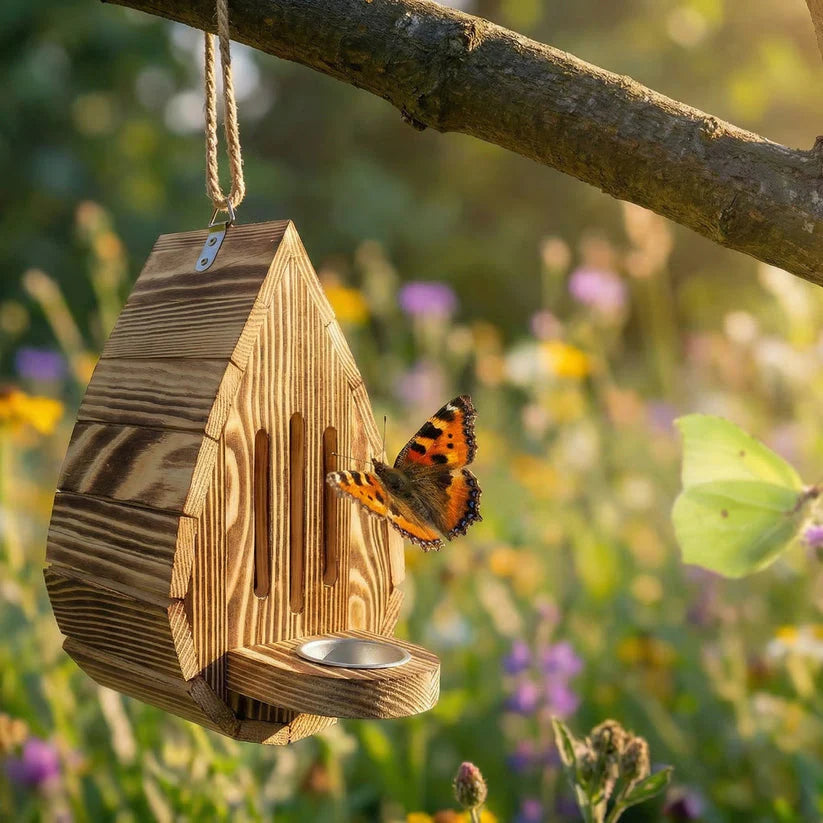
A handmade wooden butterfly house built in Wensleydale, Yorkshire — designed around 30 years of direct field observation, not aesthetics. Every functional detail (slot width, wood treatment, base puddler tray, back-panel access) is the result of watching what butterflies actually use and what they avoid. Not a garden ornament. A working habitat.
- Handcrafted in Wensleydale from untreated natural wood — no varnish, no sealant
- Calibrated slot width — sized to admit butterflies while excluding birds and predators
- Built-in mineral puddler tray at the base — the feature most butterfly houses omit entirely
- Aerodynamic teardrop form — stable in wind, won't swing and deter returning butterflies
- Full rear access panel — opens without tools for easy cleaning and refilling
- Wood weathers naturally to blend into garden surroundings within one season
- Each piece individually made — minor variation in grain and tone is normal
Design Details
🕳️ Calibrated Slot Width
Too wide lets in predators; too narrow and butterflies won't enter. The current width is the result of years of direct observation — not a standard catalogue measurement.
💧 Integrated Puddler Tray
Butterflies need dissolved minerals (sodium, potassium, calcium) they can't get from nectar. The base tray holds damp mineral water — the single most important feature for attracting and retaining butterflies.
🪵 Untreated Natural Wood
Varnish and sealant emit chemical odours that butterflies detect and avoid. This house uses only bare natural wood — it weathers, greys, and eventually looks as though it grew there.
🔓 Tool-Free Rear Access
The full back panel opens by hand. Clean the interior, refill the puddler, close. Takes under two minutes — and prevents the mite and parasite build-up that makes neglected houses counterproductive.
How It Compares to Garden Centre Butterfly Houses
| Feature | This House | Typical Garden Centre |
|---|---|---|
| Slot width | ✓ Calibrated by observation | ✗ Standardised, untested |
| Puddler / mineral tray | ✓ Built in at base | ✗ Not included |
| Wood treatment | ✓ Untreated — no chemical odour | ✗ Varnished or painted |
| Wind stability | ✓ Teardrop form — aerodynamically stable | ✗ Box form — swings in wind |
| Interior access | ✓ Full rear panel, tool-free | ✗ Fixed or screwed shut |
| Made by | ✓ Individual maker, Wensleydale | ✗ Mass-produced |
Product Specifications
| Material | Untreated natural wood — no varnish, no sealant, no paint |
| Form | Teardrop profile — aerodynamically stable in wind |
| Entry slots | Calibrated width — butterfly-entry, predator-excluding |
| Puddler tray | Integrated at base — fill with damp sand or mineral water |
| Access | Full rear panel, opens by hand — no tools required |
| Hanging | Jute rope with carabiner clip — ready to hang |
| Weather resistance | Suitable for year-round outdoor use; weathers naturally |
| Maintenance | Wipe interior seasonally; refill puddler tray as needed |
| Made in | Wensleydale, North Yorkshire, UK |
| Note | Each piece is handmade — grain and tone vary naturally |
How to Use
- Hang from a branch, fence post, or wall bracket — ideally 1.5–2m off the ground, facing south or south-east.
- Position near nectar plants (buddleia, lavender, marjoram) but in a spot with some shelter from direct wind.
- Fill the base puddler tray with damp sand or a small amount of mineral water — top up every few days.
- Leave the interior undisturbed during active season (April–October); clean out in late autumn before winter.